Here are the website that I look for reference for my research.
link
link
link
Showing posts with label Visual Research Methodology. Show all posts
Showing posts with label Visual Research Methodology. Show all posts
Tuesday, 14 October 2014

INFOGRAPHIC
So here is the infographic that I created based on the survey and also the benefits of consuming coffee.

Survey
I have gotten the reply for my survey question.There were about 22 people who do the survey.
So here are the overall summary.
Friday, 4 July 2014
Infographic.
Well today's class was quite simple. We were introduced to Infographic.
Infographic is the simplest way for designers to present complex information, data and knowledge clearly and quickly.
Here is some visuals on what is Infographic


Infographic is the simplest way for designers to present complex information, data and knowledge clearly and quickly.
Here is some visuals on what is Infographic


So, our 1st task is to find a local product and do research about that product and create a piece of infografic. So, for now our job is to find the product!
That's all for now..
Thursday, 3 July 2014
The GENIUS of DESIGN.
Last class, Mr.Tham ask us to watch a BBC documentary. It's about the history of design. Here is the link of the documentary. Video
So, what I learn is that basically design is way of communication and...
Design is just being REBORN.
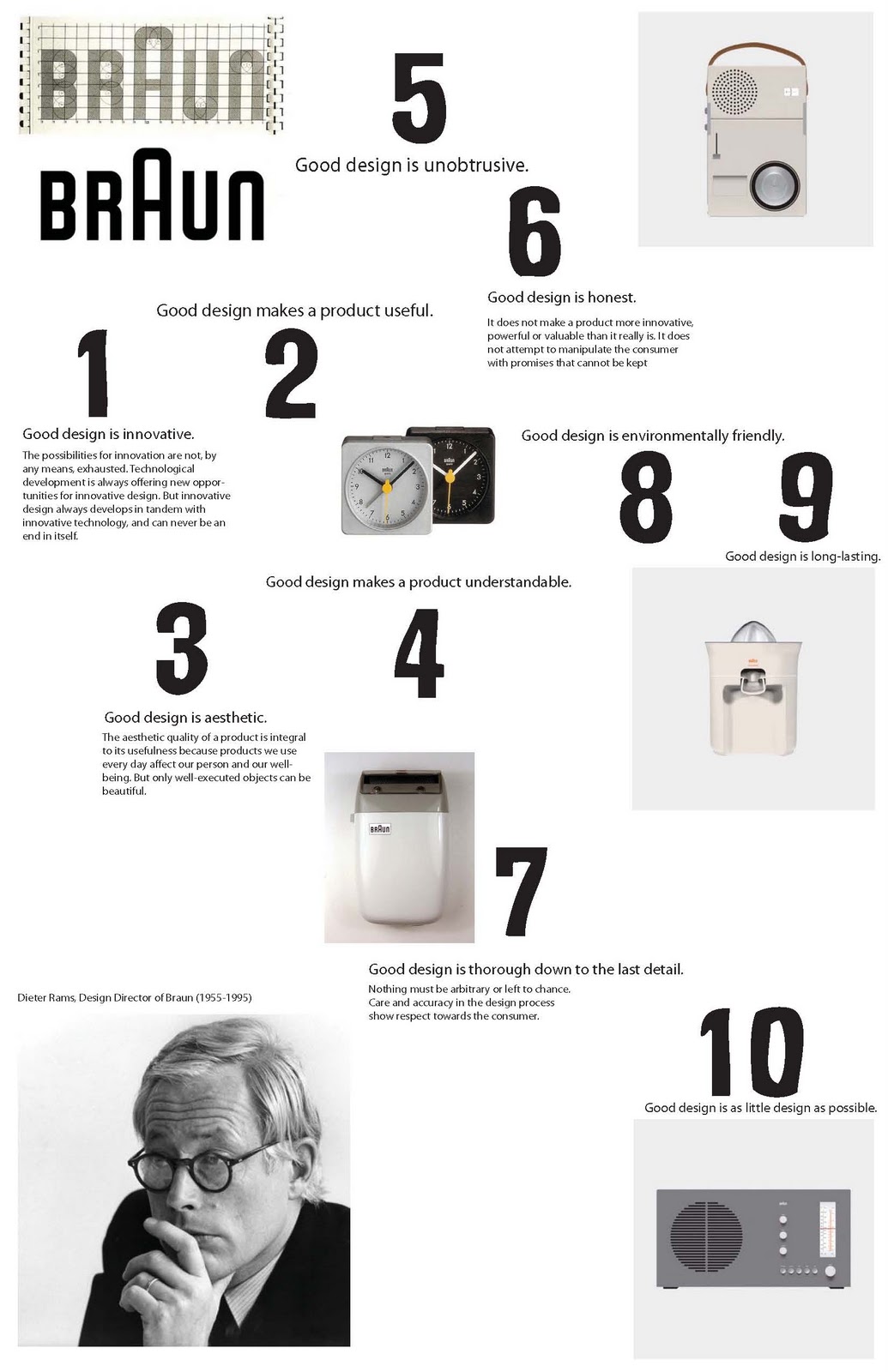
Here I would like about an Industrial designer DIETER RAMS!
He become one of the most recognized and influential designer of 20th century. I also found out that he is firm believer in Functionalism. Dieter Rams vision of design is represented by the phrase "Less, But Better".
After watching this long documentary which has five parts. I agree to what Dieter Rams says:
Design Should Not Dominate Things. Not Dominate People. It Should Help People.
Last but not least. Here is the 10 commandments of design.
REFERENCING.
On the 20th June, the first thing that Mr.Tham taught is about referencing. So what is referencing ? "he asked"
Well it's pretty simple the word referencing comes from the word reference.
Referencing is used to acknowledge the source of information that one use in their writing.
There are 3 types of referencing, they are HARVARD, A.P.A and Chicago. So,below are the explanation on the 3 type of referencing.
1. HARVARD (known as system referencing)
-Referencing is a system used in the academic community to indicate where ideas, theories and quotes, used in an assignment, can be found. The way of acknowledging the work of another author is to use a referencing system. It is really important for students to identify the words from other author to avoid plagiarism. So one probably thinks what they need to reference.
- Direct quotations – this is when you copy another author’s material word-for-word. You should show the reader that it is a direct quote by placing the material in inverted commas. Traditionally, double inverted commas have been used (“) but it is now acceptable, and preferable to use single inverted commas (‘). Sometimes it is difficult to avoid the direct quotation as the author’s words may precisely describe the point you are trying to make. However, do try to avoid the overuse of direct quotations; try to paraphrase the author’s work where possible.
- Paraphrasing – this is when you take another author’s ideas and put them into your own words. You are still copying someone else’s work, so you must reference it. You do not need to use inverted commas when you paraphrase, but you must clearly show the reader the original source of your information. Here is the link where I got my reference from Ref.
A.P.A Style requires reference lists, not bibliographies.Well it's quite similar to Harvard
system. Here is more detailed info for A.P.A Ref.
3. CHICAGO
The Chicago Manual of Style presents two basic documentation systems: (1) notes and bibliography and (2) author-date. Choosing between the two often depends on subject matter. In this system, sources are briefly cited in the text, usually in parentheses, by author’s last name and date of publication.Click on the link for more understanding. Ref
All of this referencing,should not be more than 5 years from now as it could be considered irrelevant.
Next we learnt about Data. There is two types of data:
system. Here is more detailed info for A.P.A Ref.
3. CHICAGO
The Chicago Manual of Style presents two basic documentation systems: (1) notes and bibliography and (2) author-date. Choosing between the two often depends on subject matter. In this system, sources are briefly cited in the text, usually in parentheses, by author’s last name and date of publication.Click on the link for more understanding. Ref
All of this referencing,should not be more than 5 years from now as it could be considered irrelevant.
Next we learnt about Data. There is two types of data:
- Collection - facts are collected as reference as analysis.
- Sampling - Questions & Survey ( Market management).
- Primary - user / buyer / owner / victim
- Secondary - non-user
- Tertiary - give you permission to communicate with them. They raise their hands, and actively let your content in every month, week, or day that you deliver it.
There are 5 demographics can be used for target audience.
- Age
- Location
- Gender
- Occupation
- Ethnic background
For more info click : Ref.
Here is really good example on target audience commercial!
That's it for now.
Saturday, 21 June 2014
Qualitative and Quantitative Research
Here is my reflection on Qualitative and Quantitative Research based on my lecture explain.
Well its pretty simple to understand.
Qualitative Research :-
Qualitative Research is simply descriptive data. It is ways in which people think or feel.
Quantitative Research :-Quantitative Research gathers data in numerical form. This can be used to create charts and graphs.
Well its pretty simple to understand.
Qualitative Research :-
Qualitative Research is simply descriptive data. It is ways in which people think or feel.
Quantitative Research :-Quantitative Research gathers data in numerical form. This can be used to create charts and graphs.
Subscribe to:
Posts (Atom)